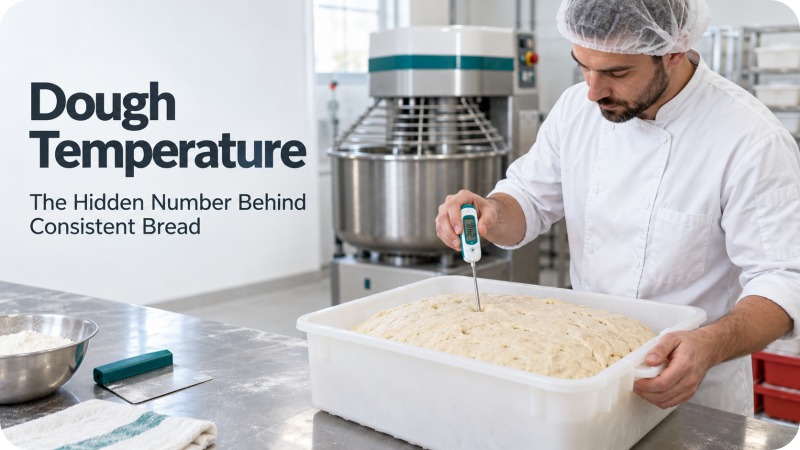
Ваша рецептура не изменилась, однако утренняя партия поднимается медленно, а дневная партия доходит до делителя раньше графика. Прежде чем менять дрожжи или винить расстоечный шкаф, измерьте температуру теста после замеса. Одинаковый вес ингредиентов не гарантирует одинаковую ферментацию, если партии начинаются при разных температурах.
Для коммерческих пекарен этот показатель связывает замес с остальными этапами производства. Он помогает объяснить, почему тесто доходит до формовки, расстойки и выпечки в разное время. Контроль этого показателя делает график более предсказуемым, но температуру необходимо рассматривать наряду с развитием теста, качеством ингредиентов и ходом ферментации.
Что означает желаемая температура теста
Желаемая температура теста, часто сокращаемая до DDT (Desired Dough Temperature), — это целевая температура в конце замеса. Конечная температура теста — это фактически измеренный результат. Ни один из этих терминов не означает температуру воды, температуру в помещении или настройку расстоечного шкафа.
King Arthur Baking приводит 75-78 градусов по Фаренгейту, примерно 24-26 градусов по Цельсию, в качестве общего ориентира для пшеничного теста в конце замеса. Рассматривайте это как начальный ориентир, а не как спецификацию для каждого продукта. Для замедленного теста, ржаных заквасок и сдобных изделий могут потребоваться другие целевые показатели.
Установите целевой показатель для каждого утвержденного рецепта и процесса. Проверьте его на соответствие времени ферментации, удобству в работе и качеству выпечки, а затем определите допустимый рабочий диапазон. Цель без метода измерения или реакции на отклонения — это просто число в технологической карте.
Справочно: профессиональное руководство King Arthur Baking по температуре теста
Почему температура меняет производственный график
В обычных условиях ферментации хлеба более теплое тесто обычно бродит быстрее, а более холодное — медленнее. Если персонал придерживается одного и того же времени независимо от температуры, партии могут поступать на формовку или в печь на разных стадиях готовности.
Температура также влияет на работу с тестом. Партия может казаться более мягкой или вести себя иначе при делении и формовке, особенно если ферментация зашла дальше, чем ожидалось. Эти признаки сами по себе не являются доказательством температурной проблемы; гидратацию, свойства муки и замес все равно нужно проверять.
Операционный риск носит кумулятивный характер. Одна ранняя партия может занять место в расстоечном шкафу до того, как печь будет готова, в то время как задержанная партия заставляет оборудование простаивать. Используйте записи о температуре для расследования этих сбоев, а не автоматически сокращайте время расстойки или добавляйте больше дрожжей.
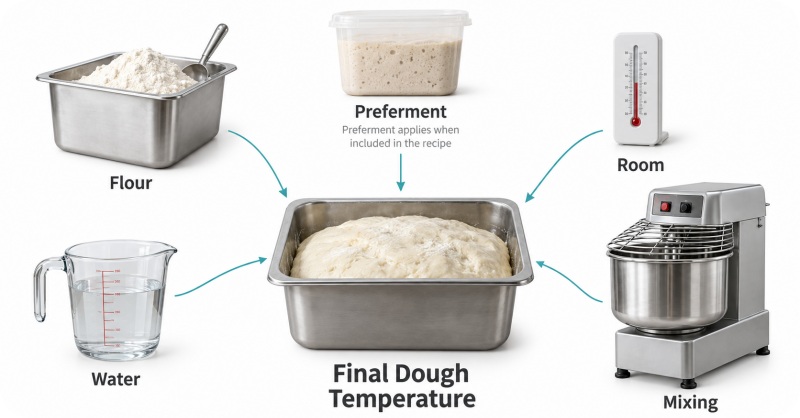
Откуда берется тепло
Мука, вода, помещение и любая опара влияют на конечный результат. Замес добавляет механическую энергию, которая способствует нагреву. Конструкция тестомеса, скорость, продолжительность, консистенция теста и размер партии влияют на результат, поэтому одна и та же настройка воды может не работать на разных машинах.
Условия также меняются в течение смены. Мука, хранящаяся рядом с теплой производственной зоной, может отличаться от муки, принесенной ранее. Дежа, используемая повторно, может быть теплее, чем для первой партии. Запись этих условий помогает отделить повторяющиеся закономерности от единичных ошибок.
Вода обычно является наиболее удобным параметром для регулировки перед замесом. Измеряйте ее температуру в точке подачи в партию, а не полагайтесь на то, что дисплей крана или чиллера показывает температуру фактически поданной воды.
Справочно: King Arthur Baking о желаемой температуре теста
Как рассчитать температуру воды для замеса
Для безопарного теста без использования закваски обычно используется следующий пекарский расчет:
Температура воды = (3 x желаемая температура теста) - температура муки - температура в помещении - коэффициент трения.
Например, при использовании градусов Цельсия: целевой показатель 25 градусов, мука 26 градусов, помещение 28 градусов и установленный коэффициент трения 8 градусов дают воду 13 градусов: (3 x 25) - 26 - 28 - 8 = 13.
Это практическая оценка, а не полная модель теплового баланса. Коэффициент трения — это эмпирическая поправка, полученная из предыдущих замесов, а не просто наблюдаемый рост температуры. Для этого метода рассчитайте его как утроенную измеренную конечную температуру теста минус температуры муки, помещения и воды. Повторите при сопоставимых условиях и проанализируйте результаты.
Когда используется опара, в обычной версии с четырьмя факторами используется четырехкратное значение целевой температуры, а также вычитается температура опары. Ведите все измерения и используйте калиброванный коэффициент в одной системе единиц. Перепроверяйте метод при существенном изменении рецепта, оборудования или загрузки.
Справочно: Определение коэффициента трения в хлебопечении
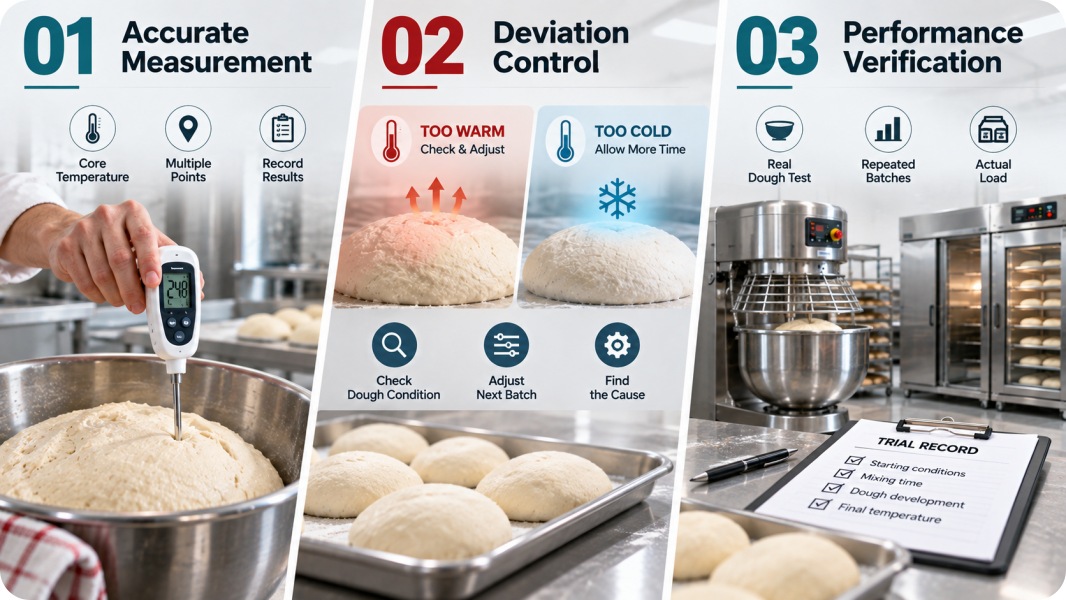
Измеряйте температуру теста последовательно
Измеряйте сразу после замеса подходящим чистым пищевым щупом, следуя инструкциям по его очистке и проверке. Вставляйте щуп в тесто, а не касайтесь металлической дежи, и дайте показаниям стабилизироваться. Остановите тестомес и выполните процедуру доступа к нему перед проведением измерения.
Для больших партий берите пробы в нескольких местах, чтобы выявить разницу температур. Инфракрасный термометр измеряет поверхность и не должен заменять измерение температуры в центре, если спецификация процесса требует последнего.
Записывайте рецепт, вес партии, температуру ингредиентов, скорость и время замеса, конечную температуру и оператора. Сохраняйте формат кратким для повседневного использования. Сравнивайте результаты с наблюдениями за ферментацией и качеством готового хлеба, а не только с соблюдением целевого показателя.
Что делать, если партия не достигла целевого показателя
Если тесто получилось слишком теплым, проверьте его развитие и ход ферментации, прежде чем менять график. Следуйте установленной процедуре при отклонениях и пересмотрите температуру воды для следующей партии. Не добавляйте не измеренный лед или воду после замеса; это меняет гидратацию и может привести к неравномерному охлаждению.
Если тесто слишком холодное, может потребоваться дополнительное время ферментации. Контролируйте его состояние, вместо того чтобы форсировать быстрое исправление с помощью чрезмерного тепла при расстойке. Температура воздуха в шкафу и температура в центре теста не меняются одновременно.
Если повторяющиеся партии не достигают цели, исследуйте исходные данные: подачу воды, температуру муки, размер загрузки, программу замеса и точность щупа. Корректируйте по одной переменной за раз, где это возможно. Сокращение времени замеса только ради снижения температуры может привести к тому, что тесто будет недостаточно развито.
Внедрите контроль температуры в испытания оборудования
Перед выбором коммерческого тестомеса протестируйте свое реальное тесто при тех размерах партий, которые вы планируете использовать. Попросите поставщика записать начальные условия, продолжительность замеса, развитие теста и конечную температуру. Сравните несколько последовательных партий, так как холодный первый замес может не отражать условия напряженной смены.
Для оборудования по охлаждению или дозированию воды подтвердите производительность при температуре входящей воды и нагрузке, ожидаемой на вашем объекте. Для расстоечных шкафов и камер замедления оценивайте процесс при загрузке, а не полагаясь только на дисплей шкафа.
Иллюстративное испытание может сравнить утренние и дневные партии по одной и той же рецептуре и программе замеса с водой, отрегулированной на основе измеренных исходных данных. Оцените, уменьшаются ли одновременно температурные колебания и отклонения в графике. Это предлагаемый тест, а не отчет о результатах клиента HONGLING или гарантия экономии.
Заключение
Стабильный хлеб начинается до того, как тесто попадает в расстоечный шкаф. Установите целевую температуру для конкретного продукта, измерьте ингредиенты, учтите влияние замеса и проверьте готовое тесто. Затем используйте эти записи для руководства при следующей партии. Контроль температуры не может заменить здравый смысл пекаря, но он дает вашей команде измеримую основу для того, чтобы сделать это суждение воспроизводимым.
Часто задаваемые вопросы
Какая конечная температура теста является хорошей для хлеба?
Для многих видов пшеничного теста полезным начальным ориентиром является примерно 24-26 градусов Цельсия. Правильный целевой показатель зависит от рецепта и графика ферментации. Подтвердите его своим собственным процессом, а не относитесь к этому диапазону как к универсальному.
Температура теста — это то же самое, что и температура расстойки?
Нет. Температура теста измеряется внутри самого теста, а температура расстойки описывает условия в шкафу. Тесту требуется время, чтобы адаптироваться к этим условиям, поэтому показания шкафа не могут заменить измерение температуры теста.
Почему тесто нагревается во время замеса?
Замес передает тесту механическую энергию, что способствует его нагреву. Результат зависит от миксера, теста, загрузки, скорости и продолжительности процесса. Записывайте свои условия, чтобы определить полезный коэффициент трения.
Ищете способы добиться более стабильных результатов выпечки?
С 47-летним опытом производства и экспортом в более чем 120 стран, мы помогаем пекарням повысить стабильность качества продукции и эффективность производства.

HONGLING предоставляет комплексные решения для пекарен, включая: • Тестораскаточные машины • Расстоечные шкафы • Ротационные печи • Подовые печи • Спиральные тестомесы • Системы охлаждения
Свяжитесь с нашей командой сегодня, чтобы обсудить ваш проект пекарни и получить индивидуальное решение..
Похожие статьи
Пищевая сода, разрыхлитель и дрожжи: в чем разница?
Подовая печь, конвекционная печь или ротационная печь
Почему цвет хлебной корочки получается неравномерным?
Спиральный тестомес или планетарный миксер: что нужно вашей пекарне?
Хлебопекарная мука или мука общего назначения: имеет ли это значение?
подпишитесь на нас, вы можете получать наш последний контент о продуктах, эксклюзивные новостные отчеты и обновления, последние местные события


online service






 +8613066853339