 .
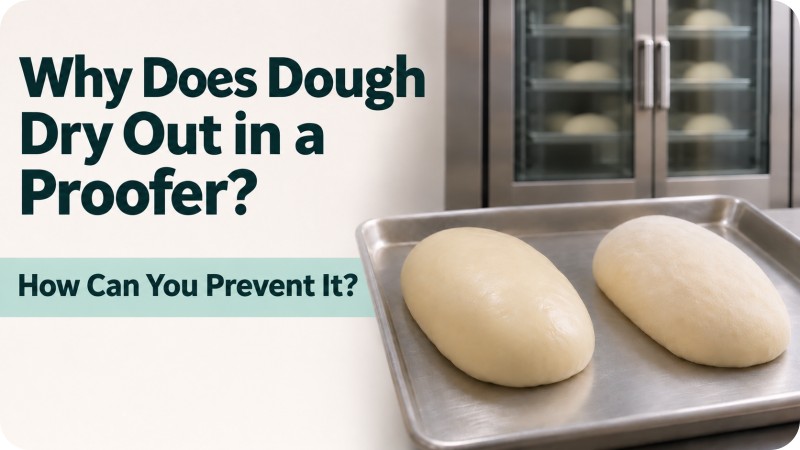
Dough dries out in a proofer when its exposed surface loses moisture faster than the surrounding environment can protect it. Common causes include insufficient humidity, direct airflow, frequent door opening and excessive uncovered waiting time. Sometimes the skin develops before the dough enters the cabinet.
The solution is not automatically a higher humidity setting. First identify when and where drying begins, then check actual operating conditions. For commercial bakeries, this approach helps protect loaf expansion and surface quality without replacing one problem with condensation or sticky dough.
What Does a Dry Dough Surface Look Like
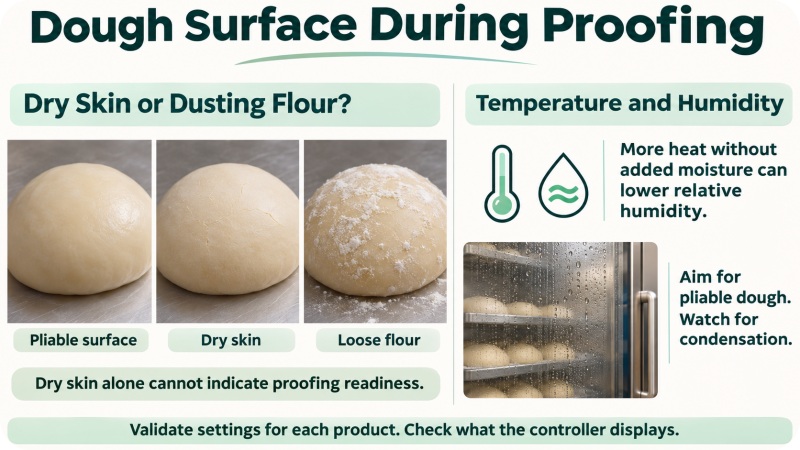
A drying surface may become dull, leathery or less flexible than the dough beneath it. As fermentation continues, the outer layer can resist stretching and develop small cracks. The resulting bread may show uneven expansion or unwanted surface tearing.
Distinguish this from loose dusting flour. A flour coating can look pale without forming a continuous skin. Inspect an appropriate test piece using hygienic handling procedures and compare it with a fresh piece from the same batch.
Also separate surface drying from underproofing or overproofing. Dough readiness depends on the product and process; a dry exterior alone does not tell you whether fermentation has progressed sufficiently.
Why Humidity and Temperature Must Work Together
Relative humidity describes moisture in the air in relation to its capacity at that temperature. Raising temperature without adding enough moisture can lower relative humidity and leave dough more exposed to drying. Increasing heat to accelerate proofing can therefore create another problem.
The objective is a pliable surface, not visibly wet dough. Excess moisture can create condensation, particularly on colder dough or cabinet surfaces.
Use a product-specific operating range established through trials and the equipment instructions. Lean bread, enriched dough and laminated products should not automatically share one program. A humidity dial marked with numbers may represent an output level rather than a measured relative humidity percentage. Understand what the controller actually displays.
Why Only Some Trays May Dry Out
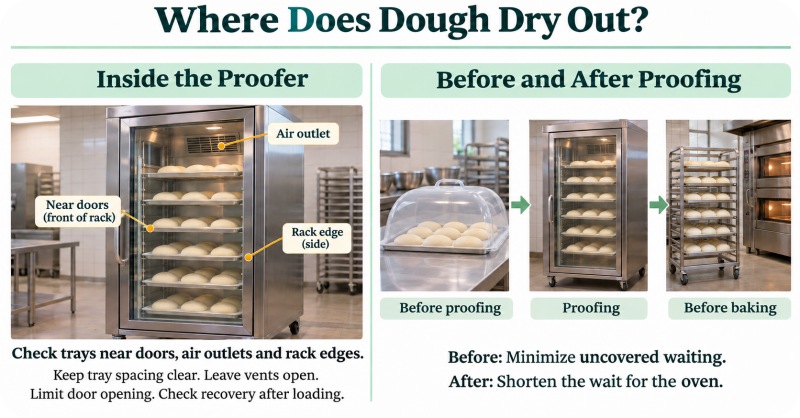
Drying concentrated near a door, air outlet or one side of a rack suggests uneven exposure. Moving air can remove moisture from the surface more quickly, especially where the dough receives a direct stream.
Check loading against the manufacturer's recommendations. Overfilled racks, oversized trays or blocked circulation paths can change how air reaches the product. Leave the specified clearances and use a consistent loading pattern when comparing batches.
Do not cover vents, disable fans or modify ducts to stop a draft. Air circulation is part of the equipment design. Persistent location-specific drying should be investigated through approved adjustments or qualified service.
Frequent door opening also disrupts cabinet conditions. Organize loading and checks so staff do not repeatedly open the door to inspect individual trays. Observe recovery after normal loading, not only an empty cabinet at equilibrium.
Check Exposure Before and After Proofing
A proofer cannot reliably undo a skin that formed while dough waited on the bench. Follow one batch from dividing through shaping, transfer, proofing and oven loading. Note every uncovered pause and any nearby extraction fan or air-conditioning outlet.
If pieces are already dull before loading, address handling and transfer time first. Use suitable food-safe covers where the process permits, allowing room for expansion and avoiding contact that damages the dough.
If dough looks normal when it leaves the proofer but dries while waiting for the oven, coordinate the baking schedule. Reducing that queue may be more effective than changing the proofing program.
Longer fermentation or holding increases the time during which surface protection matters. Covers can be useful for certain holding steps, but they are not a universal replacement for correctly controlled commercial proofing conditions.
Check the Humidity System Safely
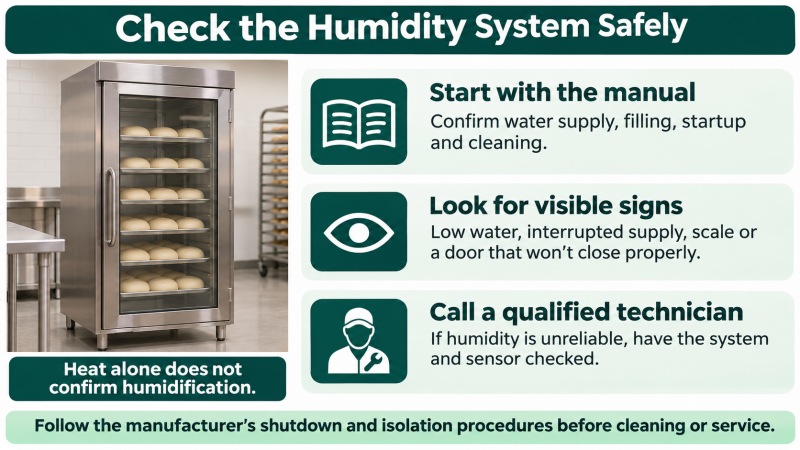
Depending on the proofer, moisture may come from a water pan, heated reservoir or automatic humidification system. Start with the operating manual: confirm the required water supply, filling method, startup sequence and cleaning procedure.
Look for accessible signs such as an empty reservoir, interrupted water supply, visible scale or an improperly closing door. Piper's proofer instructions specifically warn about low water levels and scale affecting its humidity system. The exact inspection and maintenance steps depend on your model.
Follow the manufacturer's shutdown and isolation procedures before cleaning or servicing. Do not reach into hot reservoirs, add improvised steam equipment or pour water over heaters or electrical components.
If moisture generation appears unreliable, have a qualified technician assess the system and sensor operation. A warm cabinet does not prove that its humidity function is working.
Verify Conditions Instead of Trusting One Display
A controller reading describes its sensing arrangement, not necessarily every tray position. Use an appropriate, verified temperature and humidity instrument to compare representative locations without contacting dough or obstructing circulation.
Record conditions during startup, loading, recovery and normal proofing. Allow instruments to stabilize and follow their limitations in humid environments. A single reading taken immediately after opening the door can be misleading.
Keep the recipe, dough temperature, tray loading and measurement method consistent while testing. Change one factor at a time, then compare surface condition and baked quality. This helps distinguish a humidity problem from excessive exposure or a changing dough process.
Can Dough With a Dry Skin Be Recovered
Minor surface drying and a well-developed skin are not equivalent. Light rehydration may change the appearance of slightly dry dough, but it does not guarantee recovery of extensibility, scoring behavior or finished quality.
Avoid repeatedly spraying every batch as a substitute for correcting the process. Added surface water can create sticking or uneven finishes. Evaluate affected product against your quality criteria and use only an approved recovery or rework procedure.
Do not extend proofing merely to soften the surface. The interior continues fermenting while you wait, potentially creating a separate quality problem.
Conclusion
Preventing dough from drying in a proofer requires control of humidity, temperature, airflow and exposure time together. Identify the stage and location where the skin first appears, verify the working conditions, and correct one cause at a time. A supple surface should result from a repeatable process, not routine last-minute rescue.
FAQ
What is the most common reason dough dries in a proofer?
Insufficient surface protection from the surrounding air is a common cause. Low humidity, direct airflow and long exposure can contribute. Inspect the dough before loading because the skin may have formed earlier.
Should I set humidity to the maximum?
No. Excess moisture can create condensation and sticky surfaces. Use a product-specific program and assess actual conditions rather than assuming the highest setting is best.
Why does the display look correct while dough still dries?
The display may show a setpoint or a reading from one sensor location. Tray-level conditions, door-opening recovery and the control method can differ. Compare representative locations with a suitable verified instrument.
Should dough be covered inside a commercial proofer?
It depends on the equipment and process. A correctly operated humidified cabinet may not require covers for normal final proofing. Suitable covers can help during transfer or certain long holding steps; follow the validated procedure and equipment instructions.
Does a dry surface mean the dough needs more water in the recipe?
Not necessarily. The dough interior may be correctly hydrated while the surface loses moisture. Diagnose exposure and cabinet conditions before changing the formula.
Looking for More Consistent Baking Results?
With 47 years of manufacturing experience and exports to 120+ countries, we help bakeries improve product consistency and production efficiency.

HONGLING provides complete bakery solutions including: • Dough Sheeters • Dough Proofers • Rotary Rack Ovens • Deck Ovens • Spiral Mixers • Cooling Solutions
Contact our team today to discuss your bakery project and receive a customized solution..
Related Articles
Baking Soda vs Baking Powder vs Yeast: What's the Difference?
Deck Oven vs Convection Oven vs Rotary Rack Oven
Spiral Mixer vs Planetary Mixer: Which One Does Your Bakery Need?
подпишитесь на нас, вы можете получать наш последний контент о продуктах, эксклюзивные новостные отчеты и обновления, последние местные события


online service






 +8613066853339